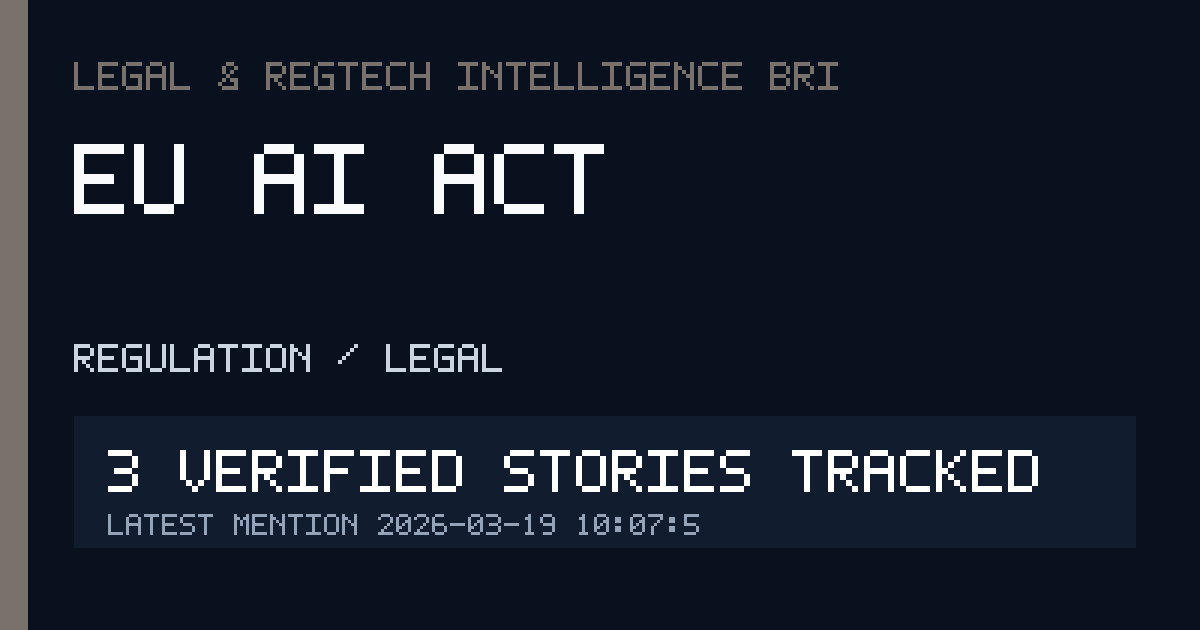
Every one of those 3 sits in a single category, regulation. Each story carries 2.3 original sources on average, compared with 3 for the broader beat in this window. Of the tracked stories, 1 of 3 also mention Borderless Digital Products, the most common co-covered peer.
Figures are computed live from our source-verified story record
— see our methodology for how impact and
sentiment are derived.
What the coverage shows about EU AI Act
Every one of those 3 sits in a single category, regulation. Each story carries 2.3 original sources on average, compared with 3 for the broader beat in this window. Of the tracked stories, 1 of 3 also mention Borderless Digital Products, the most common co-covered peer. The 19-day window averages about 1.1 stories each week. At 6.7, the average consequence score sits above the same-window beat average of 6.6. We currently track 3 Legal stories that mention EU AI Act, published between February 27, 2026 and March 17, 2026.
Stories tracked
3
Per week
1.1
Sources per story
2.3
Computed from the 3 stories linked to this entity, with beat comparisons drawn from all 672 Legal stories published in the same date window. Shares are omitted below five stories and comparisons below a twenty-story baseline.
Coverage cohort
Appears alongside
Other entities that clear the same relevance threshold in stories also covering EU AI Act. Shared-story counts are live from our verified record — not editorial picks.
The rapid expansion of borderless digital products is forcing a shift from localized regulatory responses to a universal compliance posture. This strategic pivot aims to mitigate the risks of a fragmented global legal landscape while streamlining cross-border operations.
The Global CISO Council has been established to provide a unified voice for security leaders navigating the complex AI regulatory landscape. This initiative aims to bridge the gap between technical security and legal compliance, ensuring AI adoption remains secure and ethically sound.
As the European Union pivots toward strategic autonomy following a shift in US diplomatic relations, the high cost of regulatory compliance is emerging as a primary barrier. New data suggests the EU AI Act could cost small businesses up to €500,000 per high-risk system, potentially stifling the innovation needed for global competitiveness.