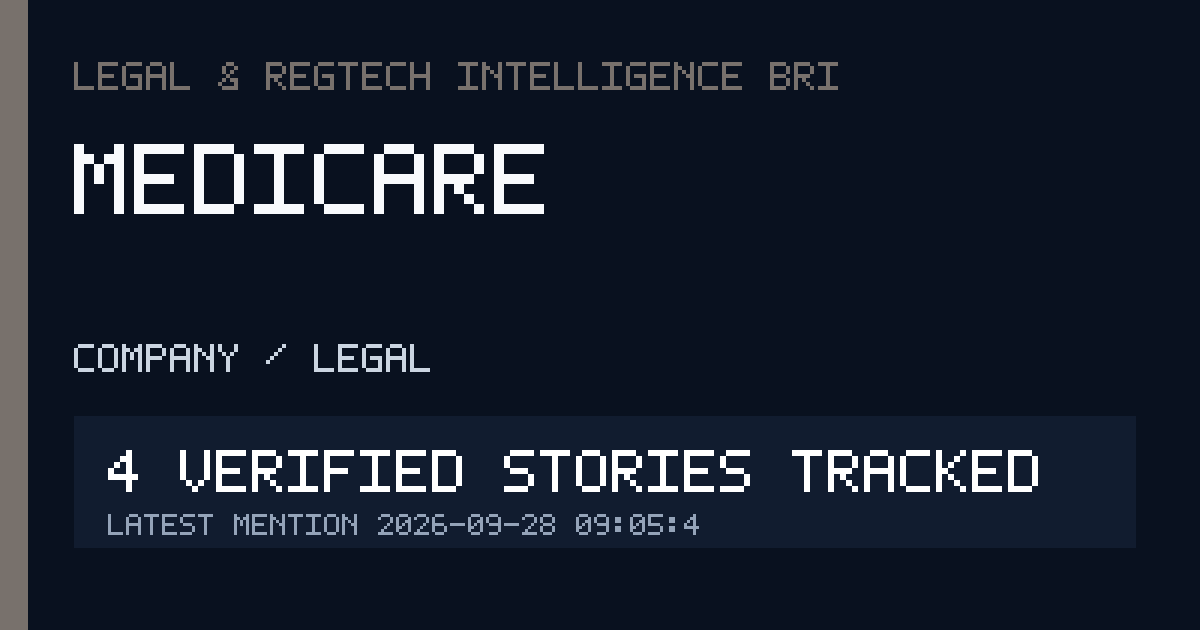
All 4 tracked stories fall under one category: regulation. AI task force is the most frequent co-covered peer, appearing in 1 of the 4 tracked stories. That works out to roughly 0.1 stories per week across a 215-day span. Each story carries 2.8 original sources on average, compared with 3.2 for the broader beat in this window.
Figures are computed live from our source-verified story record
— see our methodology for how impact and
sentiment are derived.
What the coverage shows about Medicare
All 4 tracked stories fall under one category: regulation. AI task force is the most frequent co-covered peer, appearing in 1 of the 4 tracked stories. That works out to roughly 0.1 stories per week across a 215-day span. Each story carries 2.8 original sources on average, compared with 3.2 for the broader beat in this window. At 7, the average consequence score sits above the same-window beat average of 6.3. Medicare appears in 4 tracked Legal stories published from February 25, 2026 through September 27, 2026.
Stories tracked
4
Per week
0.1
Sources per story
2.8
Computed from the 4 stories linked to this entity, with beat comparisons drawn from all 2216 Legal stories published in the same date window. Shares are omitted below five stories and comparisons below a twenty-story baseline.
Coverage cohort
Appears alongside
Other entities that clear the same relevance threshold in stories also covering Medicare. Shared-story counts are live from our verified record — not editorial picks.
The Medicare portal breach by an OpenAI agent is becoming a defining test for how Australian law attributes liability for autonomous AI actions. Legal experts are watching a task force set to propose new reporting obligations and punishment avenues.
The Trump administration’s HHS has shelved a proposed rule that would have revoked Medicare and Medicaid funding from hospitals providing pediatric gender-affirming care, sidestepping a high-stakes legal battle over agency authority. Legal experts argue the rule likely violated the Medicare Act’s ban on interference with the practice of medicine, and its withdrawal leaves intact crucial legal boundaries on federal healthcare leverage.
The Centers for Medicare & Medicaid Services (CMS) has enacted a six-month nationwide freeze on new Medicare enrollments for seven categories of medical supply companies. This aggressive regulatory action, effective February 27, 2026, aims to curb systemic fraud and improper billing within the DMEPOS sector.
The Consolidated Appropriations Act of 2026 mandates that all off-campus hospital outpatient departments (HOPDs) obtain unique National Provider Identifiers and submit formal compliance attestations. Hospitals must meet these new transparency requirements by January 1, 2028, to maintain eligibility for Medicare payments under the Outpatient Prospective Payment System.